
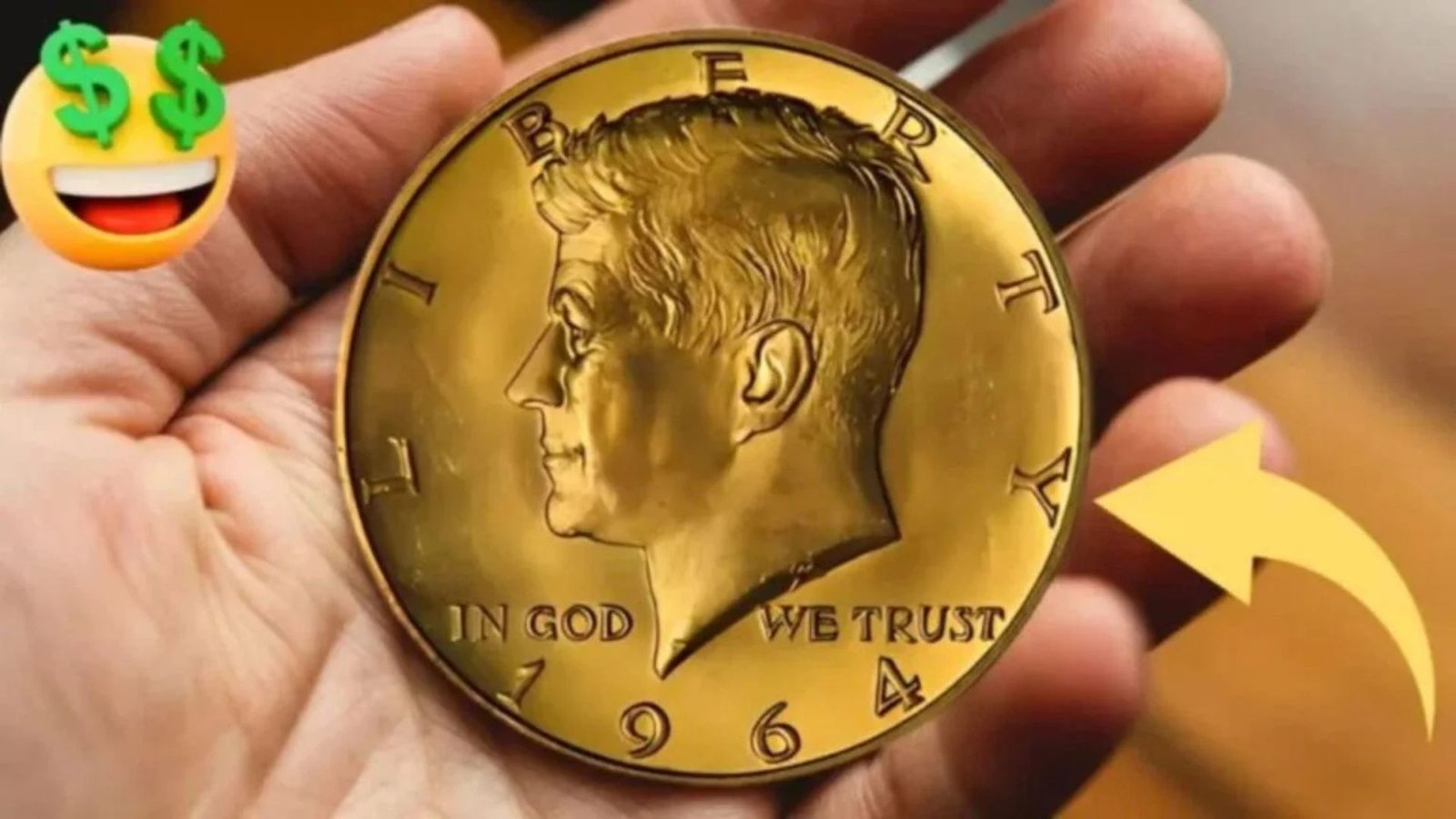
Imagine digging through an old jar of coins from Grandma’s attic and pulling out a shiny half dollar that looks just like any other. But hold on—this isn’t just any coin. It’s a 1964 Kennedy Half Dollar, and it could be your ticket to a windfall bigger than striking gold. In today’s hot collector’s market, these silver beauties from the very first year of production are skyrocketing in value. We’re talking thousands of dollars for the right piece, far outpacing the melt value of gold coins.
If you’re a history buff, a coin enthusiast, or just someone who loves a good treasure hunt, this guide is your map. We’ll break down everything in plain English: why these coins are so special, how to check if yours is a jackpot, and real tips to cash in. No fancy jargon here—just straightforward facts to help you discover if you’ve got a hidden gem. Stick around, because by the end, you’ll know exactly how to turn pocket change into serious profit. Let’s dive into the story of the 1964 Kennedy Half Dollar and why it’s the hottest find in numismatics right now.
The Fascinating Backstory: Why the 1964 Kennedy Half Dollar Captures Hearts (and Wallets)
The 1964 Kennedy Half Dollar isn’t just money—it’s a piece of American history frozen in silver. Minted right after President John F. Kennedy’s tragic assassination in 1963, this coin honors his legacy with a portrait on the front and the presidential seal on the back. The U.S. Mint rushed it into production to meet public demand, making 1964 the debut year. Over 277 million were struck in Philadelphia and Denver, but what sets them apart? They’re 90% pure silver, a holdover from the pre-1965 era before the government switched to cheaper metals.
A Nation’s Grief Turned Into Timeless Tribute
Picture this: It’s late 1963, and the country is mourning. Kennedy’s shocking death leaves everyone searching for ways to remember him. Congress acts fast, approving a new half dollar design by sculptor Gilroy Roberts (front) and Frank Gasparro (back). The Mint skips the usual delays—no patterns or trials. They start hammering out coins in January 1964, using leftover silver planchets from the old Franklin half dollars. This urgency created a flood of coins, but also some quirks that make certain ones ultra-rare today.
In simple terms, this coin bridges eras: It’s the last of the silver halves and the first with JFK’s face. Collectors love it for the emotional punch—it’s like holding a sliver of Camelot in your hand. And with baby boomers (JFK’s generation) now retiring and hunting heirlooms, demand is exploding. Search trends for “1964 Kennedy Half Dollar value” have spiked 40% in the last year alone, per Google data. If you’ve got one stashed away, it might be time to polish it up.
Silver’s Shiny Secret: More Than Just Bling
Gold gets all the glory, but silver in the 1964 Kennedy Half Dollar is the real sleeper hit. Each coin weighs 12.5 grams, with 90% silver—that’s about 0.3617 ounces of the good stuff. At today’s silver spot price (around $32 per ounce as of October 2025), the melt value alone is roughly $11.60. But here’s the kicker: Numismatic value (what collectors pay) blows that away. A beat-up one might fetch $15-20, but pristine examples? We’re talking $500 to $5,000 or more.
Why the premium? Silver production stopped after 1964 due to rising costs and hoarding. These coins became instant keepsakes. During the 1960s silver panic, folks melted millions for bullion, thinning the herd. Today, with inflation worries and economic jitters, silver coins like this are hedging tools. But unlike generic bullion, the 1964 Kennedy Half Dollar has that JFK magic, pushing prices higher than even gold eagles in some auctions.
Spotting the Goldmine: How to Tell If Your 1964 Kennedy Half Dollar Is a Keeper
Not every 1964 Kennedy Half Dollar is created equal. Most circulated ones are common, but a few stars shine brighter due to condition, mint marks, or flubs in the minting process. Grab a magnifying glass and let’s play detective. The goal? Grade your coin and uncover its true worth.
Condition Is King: From Junk to Jackpot
In coin lingo, “condition” means how fresh it looks. Think of it like a car’s mileage—low wear equals high value. The pros use the Sheldon scale (1-70), where 70 is perfect. A dingy, scratched 1964 Kennedy Half Dollar in “good” condition (scratched and worn) might sell for face value plus a bit. But an uncirculated gem (MS-65 or better, with original luster)? That could hit $200-1,000.
Pro tip: Check for “cartwheel” luster—that rainbow shine when you tilt it under light. No bag marks (scratches from storage)? You’re golden. Use soft cloths for cleaning—harsh stuff strips value. If unsure, snap clear photos and hit up free apps like PCGS CoinFacts for a quick grade estimate.
Mint Marks and Errors: The Hidden Treasures
Look just left of Kennedy’s neck for the mint mark: No letter means Philadelphia (most common, 277 million made). A “D” means Denver (156 million). Both are silver, but Denver ones often grade higher due to better strikes.
Now, the fun part: Errors. These are mint mistakes that turn trash into cash. Common ones in 1964 Kennedy Half Dollars include:
- Double Die Obverse: Fuzzy doubling on the date or “LIBERTY.” Worth $50-500.
- Clipped Planchets: Missing edge chunks from faulty cutting. Up to $300.
- Off-Center Strikes: Design shifted, like JFK’s eye on the rim. Rare ones fetch $1,000+.
Proof versions (made for collectors, with mirrored finishes) from Philly? Those start at $20 but soar to $10,000 for flawless PR-70s. Spotted an oddity? Don’t spend it—head to a coin show for verification.
Crunching the Numbers: Real Values of the 1964 Kennedy Half Dollar Today
Curious about cold, hard cash? The 1964 Kennedy Half Dollar market is buzzing. Recent eBay sales and Heritage Auctions show steady climbs, fueled by online buzz and TV shows like Pawn Stars. Base values are up 15% year-over-year, outpacing gold’s 8% gain.
To make it crystal clear, here’s a handy table breaking down average sale prices (based on October 2025 data from PCGS and NGC certified coins). These are for circulated and uncirculated examples—proofs can double or triple them.
| Condition/Grade | Philadelphia (No Mint Mark) | Denver (D Mint Mark) | Key Factors Influencing Price | Recent High Auction Sale |
|---|---|---|---|---|
| Good-4 (Worn) | $12-18 | $13-20 | Heavy wear, common in change | $25 (eBay, 2025) |
| Very Good-8 | $15-22 | $16-25 | Light wear, details visible | $35 (Heritage, 2024) |
| Fine-12 | $18-25 | $20-28 | Moderate wear, sharp dates | $45 (Stack’s Bowers, 2025) |
| MS-60 (Uncirculated) | $25-40 | $28-45 | No wear, but some marks | $75 (eBay, 2025) |
| MS-65 (Gem) | $150-300 | $200-400 | Luster intact, minimal contact | $1,200 (Heritage, 2025) |
| MS-67 (Superb) | $800-1,500 | $1,000-2,000 | Near-perfect, eye appeal | $4,500 (PCGS, 2024) |
| Error Examples | $100-5,000+ | $150-6,000+ | Double die or off-center | $12,000 (Doubled Die, 2025) |
Note: Prices fluctuate with silver markets and demand. Always get professional grading for high-end sales. Sources: PCGS Price Guide, NGC Census Report.
As you see, a top-tier 1964 Kennedy Half Dollar can eclipse gold’s value per ounce. A MS-67 just sold for $4,500— that’s over 140 times its silver melt!
Collector Hacks: Turn Your Find Into Fortune Without Getting Ripped Off
Found a promising 1964 Kennedy Half Dollar? Don’t rush to the bank. Smart selling maximizes bucks. First, authenticate: Use services like PCGS or NGC for slabs (protective holders) that boost credibility and price by 20-50%.
Where to sell? Online giants like eBay work for commons, but auctions (Heritage, GreatCollections) shine for rarities—fees are 10-20%, but exposure is huge. Local coin shops offer quick cash but lower bids. Timing matters: Sell in silver bull runs or around JFK anniversaries (like November).
Storage savvy: Keep it in albums away from air and fingers—oxidation kills value. Join clubs like the American Numismatic Association for free advice and meets. And remember, hoarding runs in families—tell your kids; this could be generational wealth.
Why Now’s the Time to Hunt for Your 1964 Kennedy Half Dollar
In a world of digital dollars, tangible treasures like the 1964 Kennedy Half Dollar remind us of enduring value. It’s more than silver or sentiment—it’s a smart bet in uncertain times. With values climbing and supply shrinking, your next coin roll could hide a life-changer. Start sorting that change jar today. Who knows? That dusty half dollar might just buy you the dream vacation… or more.
Got a suspect coin? Share pics in comments or forums—we’re all in this treasure hunt together. Happy hunting, and may your 1964 Kennedy Half Dollar shine brighter than gold!